‌ ‌ ‌ ‌ ‌ ‌ ‌ ‌ ‌ ‌ ‌ ‌ ‌ ‌ ‌ ‌ ‌ ‌ ‌ ‌ ‌ ‌ ‌ ‌ ‌ ‌ ‌ ‌ ‌ ‌ ‌ ‌ ‌ ‌ ‌ ‌ ‌ ‌ ‌ ‌ ‌ ‌ ‌ ‌ ‌ ‌ ‌ ‌ ‌ ‌ ‌ ‌ ‌ ‌ ‌ ‌ ‌ ‌ ‌ ‌ ‌ ‌ ‌ ‌ ‌ ‌ ‌ ‌ ‌ ‌ ‌ ‌ ‌ ‌ ‌ ‌ ‌ ‌ ‌ 

Equity Market Outlook

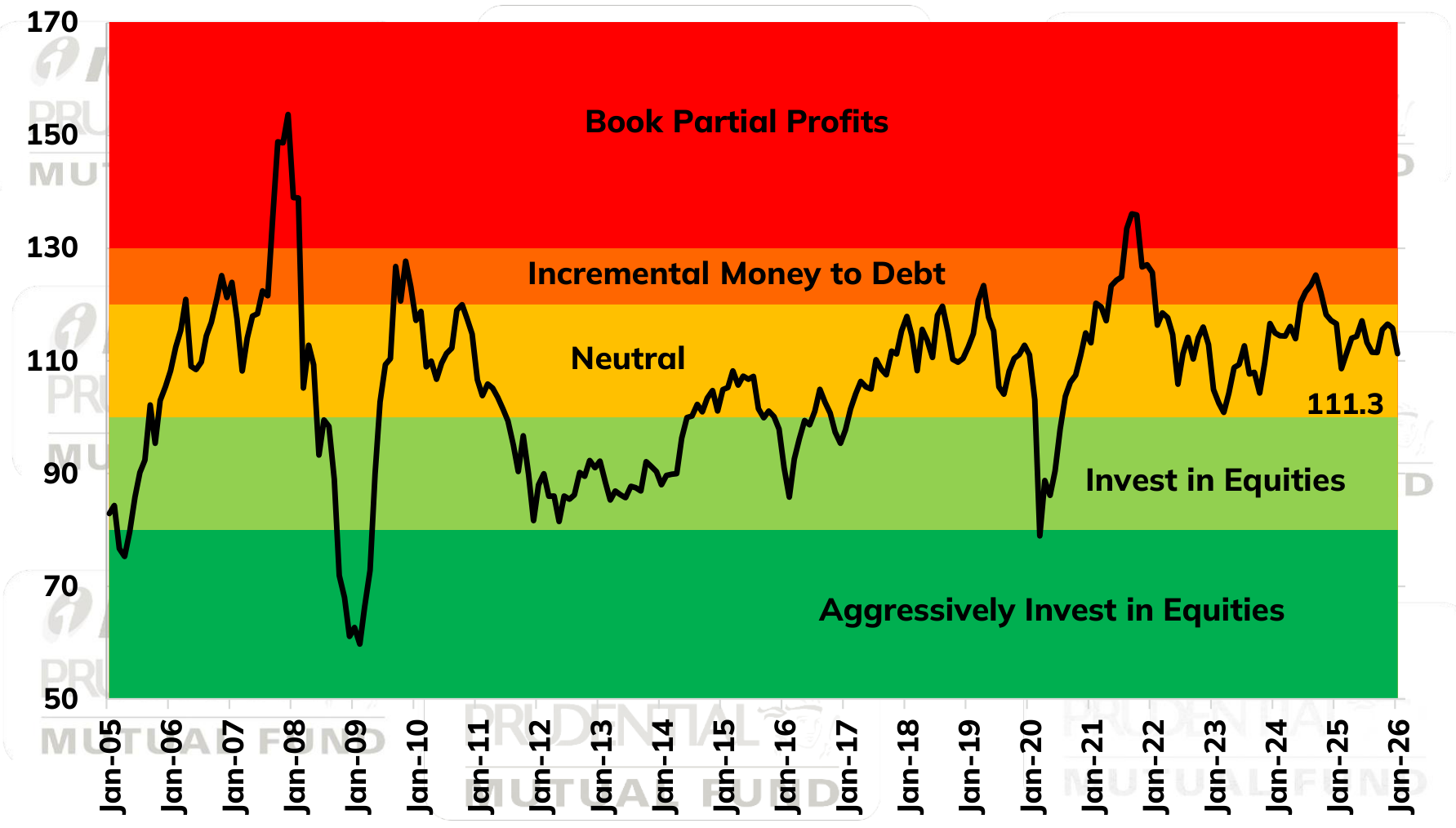
ICICI Prudential Equity Valuation Index indicates that despite recent corrections, valuations are not cheap. It continues to remain in the neutral zone. To navigate volatility, we recommend investing in Hybrid/ Asset Allocation schemes. Since recent corrections have cooled-off valuations a bit, one can opt for asset allocation schemes with higher equity exposure. Investors who wish to invest in equity for long-term, can invest in schemes that have the flexibility to maneuver across sectors / market cap.
Equity Valuation Index
Data as on January 31, 2026 has been considered. Equity Valuation Index (EVI) is a proprietary model of ICICI Prudential AMC Ltd. (the AMC) used for assessing overall equity market valuations. The AMC may also use this model for other facilities/features offered by the AMC. Equity Valuation index is calculated by assigning equal weights to Price-to-Earnings (PE), Price-to-Book (PB), G-Sec*PE and Market Cap to GDP ratio any other factor which the AMC may add/delete from time to time. G-Sec-Government Securities. GDP-Gross Domestic Product.
Key Takeaways
The recently announced Economic Survey & Union Budget highlight the compounding effect of Govt.’s decade long reforms. Fiscal deficit is well under control, India remains one of the fastest growing major economy and inflation outlook is benign given supply side reforms
Also, recent reforms- a combination of fiscal stimulus (Direct Tax cuts + GST rate cuts) & monetary stimulus (RBI rate cuts) bodes well for already healthy demand environment.
Indian markets have underperformed global peers significantly in recent times, cooling-off valuations. Rupee has also depreciated– making a case for FII comeback. Despite recent corrections from its peak, though overall market valuations have cooled-off, they continue to remain in the neutral zone.
While the narrative around India’s long term structural growth continues to remain positive, there may be minor hiccups in the interim due to– geo-political & trade tensions, choppy FII flows, soaring global valuations & volatile macros.
We continue to recommend investing in hybrid /multi asset allocation schemes to manage anticipated interim volatility. If investing in equities for long term, we recommend schemes with unconstrained investing approach with flexibility to invest across sectors / themes / market cap.
U.S.– United States of America; US Fed: Federal Reserve of US; FY: Financial year. FI– Foreign Portfolio Investor. AI– Artificial Intelligence.
Detailed Equity
Update
View Fund
Recommendation

Fixed Income Outlook

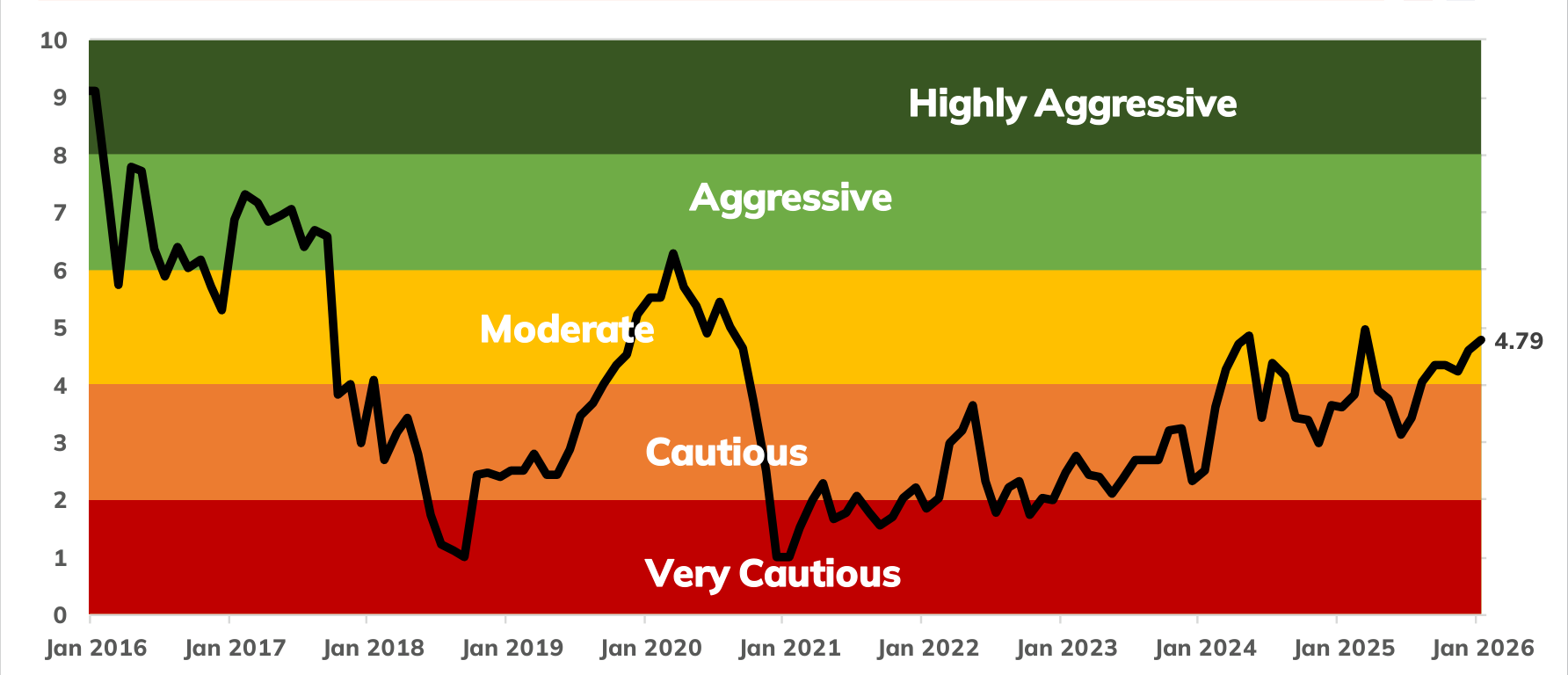
Our Debt valuation index hints at a moderately rewarding stance on duration. We would like to express it as a barbell strategy with a combination of long duration Gsecs/SDL and short term corporate bonds.
Debt Valuation Index
Data as on Jan 31, 2026. Debt Valuation Index considers WPI, CPI, Sensex returns, Gold returns and Real estate returns over G-Sec yield, Current Account Balance, Fiscal Balance, Credit Growth and Crude Oil Movement for calculation. RBI-Reserve Bank of India.
Key Takeaways
There is seasonal tightness in liquidity conditions in Jan-Mar quarter, owing to lagged fiscal spending and build up of govt. cash surplus. Due to this, we have seen a rise in yields in short duration CD/CB segment.
Given this backdrop, we recommend investors to invest in low/short duration funds to capitalize on potential accrual opportunities. In G-secs, we saw markets being fearful and cautious possibly due to end of rate cutting cycle by the RBI; losses in existing portfolio; fear of higher supply of G-sec/SDLs.
We believe that these fears may be overstated and sentiment-driven as there are adequate drivers of demand for G-secs from banks, NPS funds and insurance sector. The recent Union Budget announcement was neutral for fixed income markets.
Gross borrowing costs announced are higher than market expectations, and has pushed up yields. However, the current yield scenario is already elevated and therefore, any further rise in yields may be relatively capped.
At the current levels, we believe most of the negative are already priced in. The 15-year and above G-sec curve is already pricing in a normal economic environment.
Detailed Fixed Income Update
View Fund
Recommendation
To invest digitally
Follow us:
DISCLAIMERS:

The stock(s)/sector(s) mentioned above do not constitute any recommendation and ICICI Prudential Mutual Fund may or may not have any future position in this stock(s). Past performance may or may not be sustained in the future. The portfolio of the scheme is subject to changes within the provisions of the Scheme Information document of the Scheme.

To update your contact details Click here.

The information contained herein is only for the purpose of information and not for distribution and do not constitute an offer to buy or sell or solicitation of any offer to buy or sell any securities or financial instruments in the United States of America ("US") and/or Canada or for the benefit of US persons (being persons falling within the definition of the term "US Person" under the US Securities Act, 1933, as amended) or persons residing in Canada.

Mutual Fund investments are subject to market risks, read all scheme related documents carefully.